Tokyo has surprisingly few must-see sights and an enormous amount to do. First-time visitors work through a list and miss the point, which is that the streets are the attraction.
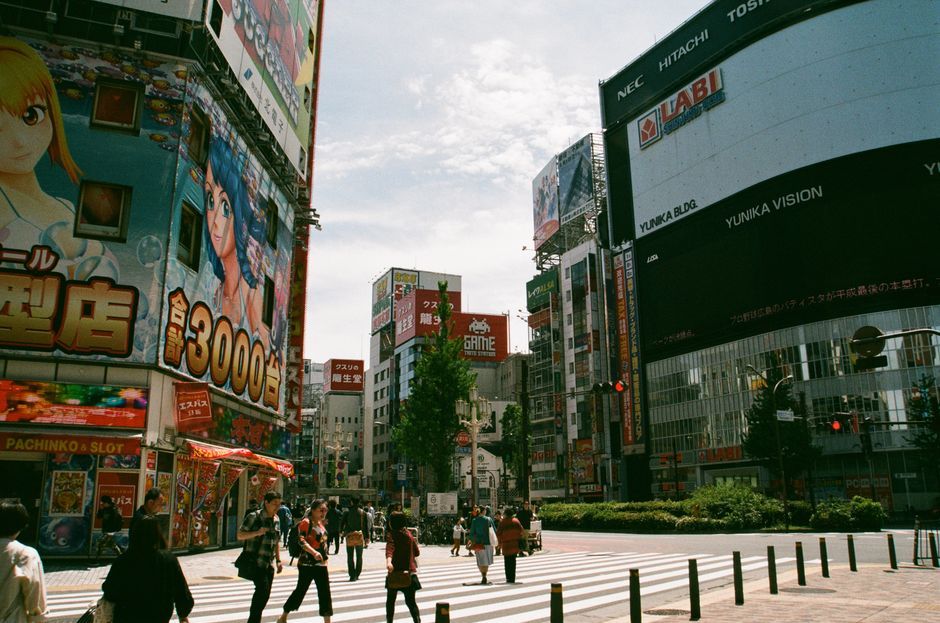
The neighbourhoods
Yanaka — pre-war wooden streets that survived both the 1923 earthquake and the wartime bombing. Residential rather than preserved, with a long shopping street and a cemetery of cherry trees.
Shimokitazawa — vintage shops, small live venues, coffee, and no tall buildings.
Kagurazaka — stone-paved lanes, a former geisha quarter, and French bakeries.
Koenji — second-hand, punk, and standing bars.
Nakameguro — a canal lined with cherry trees and the shops along it.
All free, and walking them is the activity.
Free and better than most ticketed things
The Tokyo Metropolitan Government Building — two observation decks at 202 metres, free, with Fuji visible on clear winter days.
Meiji Shrine and its forest — 100,000 trees donated from across Japan in the 1920s, now looking ancient.
Senso-ji in Asakusa, and the Nakamise approach.
The Imperial Palace East Gardens.
Depachika — department store basement food halls, free to walk through, at a standard with no western equivalent. Many discount heavily in the final hour before closing.
Tsukiji outer market, still operating after the inner market moved.
Worth a ticket
teamLab — immersive digital installations that respond to the people in them. Booked timed slot, and photographs do not prepare you for it.
The Tokyo National Museum in Ueno — the finest collection of Japanese art anywhere, modestly priced and rarely crowded.
The Ghibli Museum, if you can get in. Tickets go on sale on a fixed monthly schedule and are gone within minutes.
A sumo tournament — six a year, three in Tokyo, with tickets releasing about a month ahead.
Eating, which is most of the doing
Ticket-machine restaurants — buy a meal ticket at the door, hand it over, sit down. Ramen, curry, gyudon, a few euros.
Standing soba bars near stations.
Izakaya in the evening, ordering progressively. The otoshi seating charge with a small appetiser is a cover charge, not a scam.
Omoide Yokocho in Shinjuku and the alleys under the tracks.
Day trips
| Destination | Time |
|---|---|
| Kamakura | 1h — Great Buddha, temples, coast |
| Nikkō | 2h — shrines, mountains |
| Hakone | 1h30 — onsen, Fuji |
| Kawagoe | 45min — Edo warehouse streets |
Practical
Suica or Pasmo IC card for all local transport. No JR Pass for a Tokyo-only trip.
Last trains around midnight, then nothing until about 5am.
Cash at small restaurants and shrines; 7-Eleven ATMs take foreign cards.